







RAM 1500 vs. RAM 2500: Choosing the Right Truck for Your Needs
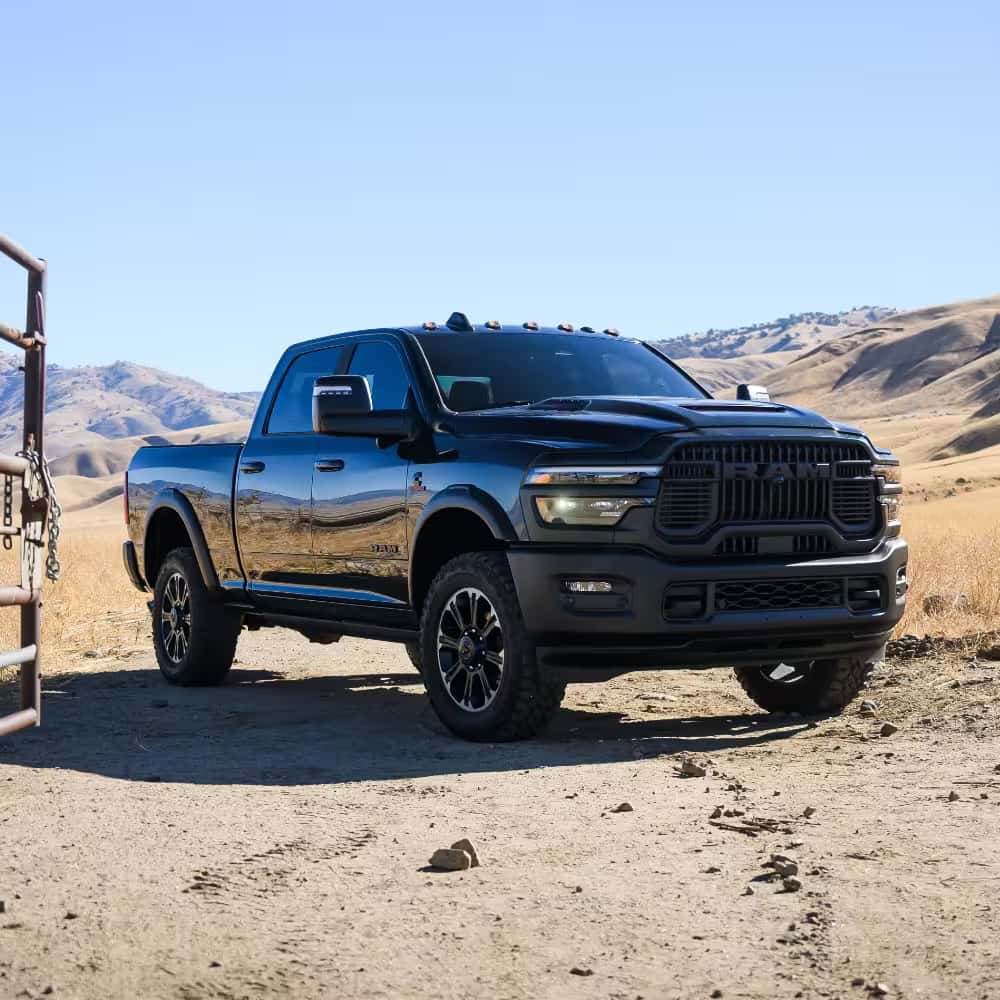
Shopping for a new pickup often comes down to one question: how much truck do you actually need? The RAM 1500 and RAM 2500 share a name, a grille, and a reputation for toughness, but underneath they’re built for very different jobs. One is a refined, comfortable half-ton designed for daily driving with real capability held in reserve. The other is a heavy-duty workhorse engineered to tow, haul, and outlast serious jobsite demands day after day. At Gurnee Chrysler Jeep Dodge RAM, we talk to Lake County drivers every week who aren’t sure which truck actually fits their life, so we broke down the real differences in towing, payload, engines, ride quality, and cost of ownership to help you decide.
Towing Capacity: Light-Duty vs. Heavy-Duty Muscle
Towing capacity is usually the first thing that separates these two trucks, and it’s often the deciding factor for shoppers. The RAM 1500 is classified as a half-ton, light-duty pickup, while the RAM 2500 is a three-quarter-ton, heavy-duty truck built specifically for bigger jobs and heavier trailers.
RAM 1500: Tows up to roughly 11,600 pounds depending on cab, bed, and engine configuration.
RAM 2500: Tows up to nearly 20,000 pounds when equipped with the available Cummins Turbo Diesel engine.
If your trailer, boat, or equipment load stays comfortably under the RAM 1500’s rating, you’ll enjoy a smoother ride and easier daily driving without sacrificing much real-world capability. If you’re regularly hauling livestock trailers, heavy construction equipment, or a large fifth-wheel camper, the RAM 2500 gives you a much wider safety margin between your typical load and the truck’s maximum rating, which matters on hills, in wind, and during sudden stops. Before you tow anything close to a truck’s maximum rating, it’s worth reviewing some basic towing safety tips to keep your trip secure, including how to distribute weight properly and check your hitch before every trip.
Payload and Bed Capacity: How Much Can You Haul?
Towing tells you what you can pull behind the truck; payload tells you what you can carry inside the bed and cab, including passengers, tools, and cargo. This is where the RAM 2500’s heavier-duty construction really shows up.
RAM 1500: Payload capacity of up to approximately 2,300 pounds.
RAM 2500: Payload capacity of up to approximately 4,000 pounds.
That extra 1,700 pounds of carrying capacity comes from a stronger frame, heavier-duty axles, and a suspension system built to handle sustained weight without sagging over time. Contractors hauling tools and building materials, landscapers loaded down with equipment, or drivers who regularly carry a truck bed camper will notice the difference immediately, both in how the truck sits under load and in how it handles on the road. Even if you rarely max out payload, having that extra margin means less strain on brakes, tires, and suspension components over the life of the truck. You can compare trims and body styles side by side when you explore the RAM 2500 lineup in person.
Engine Options: Matching Power to Your Workload
Both trucks offer strong engine lineups, but they’re tuned for different priorities. The RAM 1500 focuses on a balance of power and efficiency for everyday use, while the RAM 2500’s engines are built around sustained torque for heavy, continuous work.
RAM 1500 Engine Lineup
A capable V6 for everyday driving and light towing
A V8 Hemi option with available eTorque mild-hybrid assistance for extra low-end torque and smoother stop-start performance
An EcoDiesel V6 for drivers who want better fuel efficiency and highway range without stepping up to a heavy-duty truck
RAM 2500 Engine Lineup
A robust V8 gas engine for standard heavy-duty work and dependable everyday power
The available 6.7-liter Cummins Turbo Diesel, built for maximum torque, towing performance, and long-haul durability
The right engine choice often comes down to how you use the truck week to week. If most of your driving is commuting with occasional weekend towing, the RAM 1500’s V6 or Hemi V8 will feel effortless. If you’re regularly working the truck hard, whether that’s towing a heavy trailer daily or hauling equipment across job sites, the RAM 2500’s diesel option is built to handle that workload without straining. Want to dig deeper into how each engine performs? Our RAM 1500 engine lineup guide breaks down the specs trim by trim.
Ride Quality and Everyday Driving Comfort
If you split time between commuting, family errands, and occasional towing, ride comfort matters as much as capability. The RAM 1500 uses a coil-spring rear suspension, which smooths out bumps and delivers handling that feels closer to an SUV than a traditional work truck. It’s also easier to live with in daily traffic around Gurnee and Waukegan, with a tighter turning radius and a more forgiving ride over rough pavement.
The RAM 2500 trades some of that everyday comfort for durability. Its heavy-duty leaf-spring rear suspension is designed to carry serious weight without sagging or wearing out, which means a firmer ride when the bed is empty and a truck that feels most at home when it’s actually working. For drivers who tow or haul on a regular basis, that trade-off is worth it every time. For those who mostly drive solo or with light cargo, the RAM 1500 will likely feel more comfortable day to day, especially on longer commutes.
Fuel Economy and Cost of Ownership
Beyond towing numbers and engine specs, it’s worth thinking about what each truck costs to live with over time. The RAM 1500, especially with the V6 or EcoDiesel engine, generally delivers better fuel economy than the RAM 2500, since it’s a lighter truck with less rolling resistance and a smaller overall footprint. That can add up to meaningful savings if most of your driving is commuting rather than towing.
The RAM 2500 will typically cost more to fuel and maintain, particularly with the Cummins diesel, but that cost comes with a return: less strain on the drivetrain when towing heavy, longer service intervals on some heavy-duty components, and a truck that’s built to hold up under repeated hard use. If your work depends on towing or hauling capacity, the extra cost of ownership is often offset by fewer breakdowns and less wear over time. Our flexible financing options can help you weigh monthly payment against long-term value for either truck.
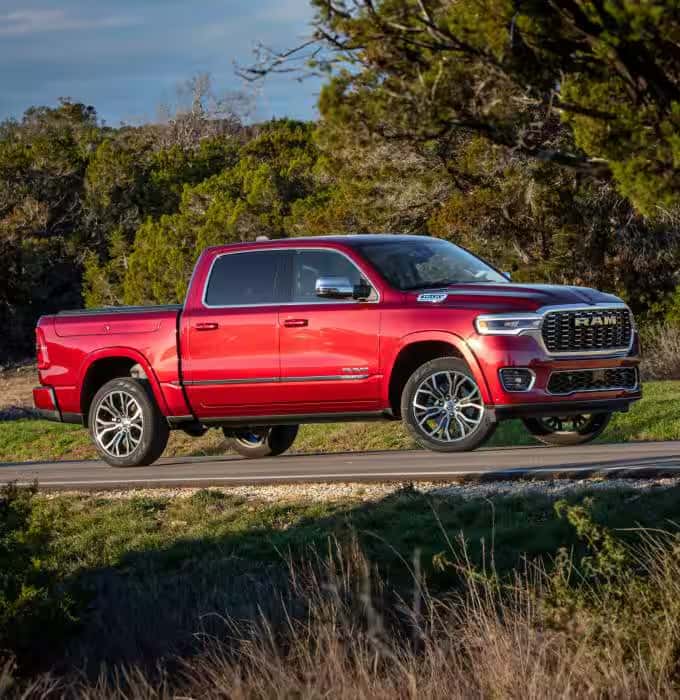
Frequently Asked Questions
What is the main difference between the RAM 1500 and RAM 2500?
The RAM 1500 is a half-ton, light-duty pickup built for a comfortable ride and everyday versatility, while the RAM 2500 is a heavy-duty truck engineered for maximum towing, payload, and jobsite durability. The 2500 rides on a heavier frame, solid rear axle, and upgraded suspension so it can handle bigger loads without the wear and sag a light-duty truck would experience over time.
How much can a RAM 2500 tow compared to a RAM 1500?
The RAM 1500 can tow up to roughly 11,600 pounds depending on configuration, while the RAM 2500 can tow up to nearly 20,000 pounds when equipped with the available Cummins Turbo Diesel engine. If you regularly tow heavy trailers, equipment, or livestock, the 2500 offers a much larger margin between your typical load and the truck’s maximum rating.
Is the RAM 1500 or RAM 2500 better for daily driving?
The RAM 1500 is generally the better choice for daily driving thanks to its coil-spring rear suspension, which delivers a smoother, more car-like ride over bumps and uneven pavement. The RAM 2500’s heavy-duty leaf-spring suspension is built for load-bearing capability rather than everyday comfort, so it can feel firmer when the bed is empty.
Does the RAM 2500 come with a diesel engine option?
Yes, the RAM 2500 offers the available 6.7-liter Cummins Turbo Diesel engine, known for high torque output that supports heavy towing and hauling over long distances. The RAM 1500 offers its own EcoDiesel V6 option for drivers who want efficiency without stepping up to a heavy-duty truck.
Which RAM truck is better for towing a camper or fifth-wheel trailer?
For smaller travel trailers within the RAM 1500’s towing range, the half-ton truck can handle the job comfortably. For larger fifth-wheel campers or toy haulers that push closer to maximum trailer weights, the RAM 2500’s higher towing capacity and sturdier frame provide a more confident, stable connection.
Can I test drive both trucks at Gurnee Chrysler Jeep Dodge RAM?
Yes, Gurnee Chrysler Jeep Dodge RAM keeps both RAM 1500 and RAM 2500 models in stock for test drives. Stop by our Gurnee showroom or contact our sales team to schedule a time to get behind the wheel of either truck and compare them side by side.
Find Your Next RAM Truck in Gurnee
Whichever side of the RAM 1500 vs. RAM 2500 debate you land on, the right choice comes down to how you actually use your truck week to week. If you want a comfortable daily driver with solid towing capability in reserve, the RAM 1500 is hard to beat. If your work demands maximum payload and towing muscle, and you’re willing to trade a bit of ride comfort for it, the RAM 2500 is built for exactly that. Ready to see both trucks in person and decide for yourself? Browse our RAM 1500 inventory, check out our flexible financing options, or contact our sales team to schedule a test drive at Gurnee Chrysler Jeep Dodge RAM.
0 comment(s) so far on RAM 1500 vs. RAM 2500: Choosing the Right Truck for Your Needs