







Grand Cherokee vs Grand Cherokee L: What Actually Sets Them Apart
If you’re comparing the Grand Cherokee vs Grand Cherokee L, the decision usually comes down to one question: how many seats do you actually need? Both SUVs share the same nameplate and plenty of engineering, but they’re built for different households. One is a nimble two-row SUV suited to daily driving and weekend errands; the other stretches the platform to add a genuine third row for bigger families. At Gurnee Chrysler Jeep Dodge RAM, we help shoppers work through this comparison every week, so here’s an honest look at what separates the two inside and out.
How Many People Can Each One Seat?
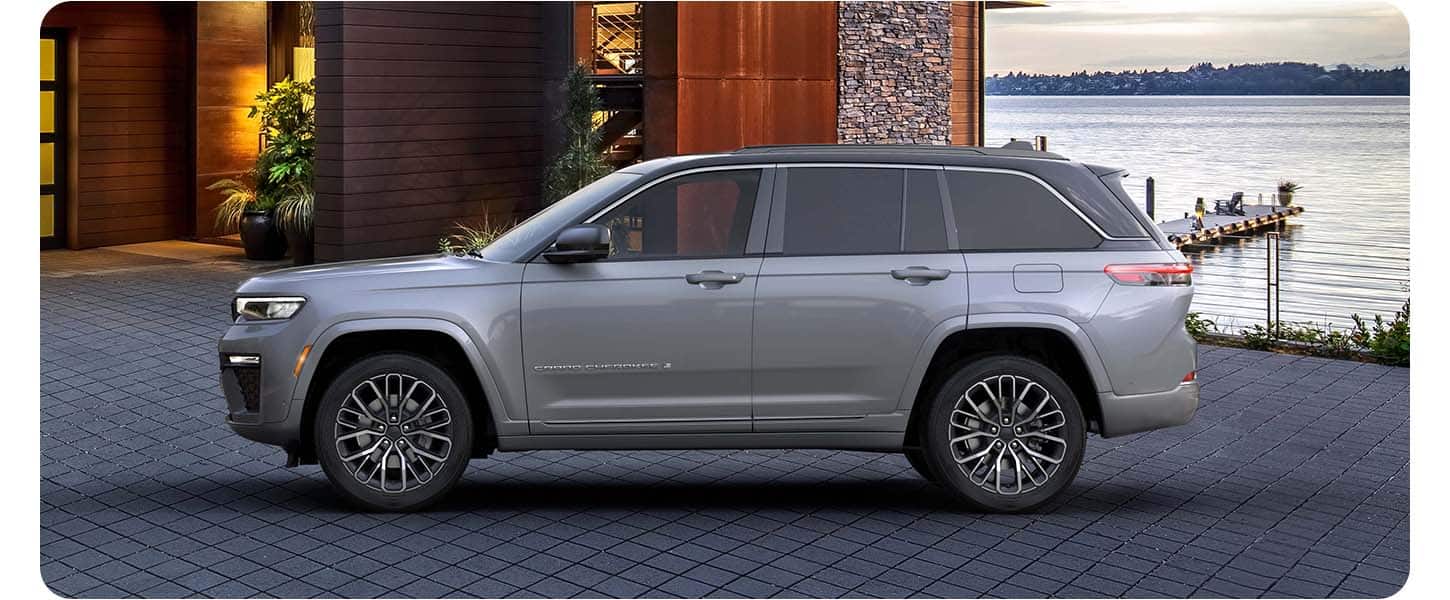
The most obvious difference between these two Jeep SUVs is passenger capacity. The standard Grand Cherokee is a two-row SUV that seats up to five people, making it a good fit for couples, small families, or anyone who rarely needs to haul a full group. The Grand Cherokee L adds a third row, giving you room for six or seven passengers depending on how the second row is configured.
- Grand Cherokee: two rows, seating for up to five
- Grand Cherokee L with second-row captain’s chairs: seating for six
- Grand Cherokee L with an optional second-row bench: seating for up to seven
If you regularly drive carpools, host visiting family, or simply want the flexibility of a third row for road trips around Lake County, that extra row of seating is the single biggest reason shoppers move up to the L. Browse the current Grand Cherokee L inventory to see how the three-row layout looks in person.
Size and Cargo Room: What the Extra Length Buys You
That third row doesn’t appear out of nowhere — the Grand Cherokee L is a genuinely larger vehicle. It measures 204.9 inches long on a 121.7-inch wheelbase, compared with 193.5 inches for the standard two-row Grand Cherokee. That extra length is what makes a comfortable third row possible without cramping the first two.
Cargo space tells a similar story:
- Grand Cherokee: 37.7 cubic feet behind the second row, up to 70.8 cubic feet with seats folded
- Grand Cherokee L: 17.2 cubic feet behind the third row, up to 84.6 cubic feet with the second and third rows folded flat
In other words, the Grand Cherokee L gives you usable cargo room even with all seats in use, while the standard Grand Cherokee asks you to fold seats down to unlock its full capacity. If cargo space matters as much as seating to you, it’s worth comparing both in person against the Grand Cherokee inventory on our lot.
Towing and Powertrain Options
Under the hood, the two SUVs are closely matched. Both are available with the standard 3.6L V6 engine paired with an 8-speed automatic transmission, and both can tow up to 6,200 pounds when properly equipped — so choosing the L for its extra seating doesn’t mean giving up towing capability.
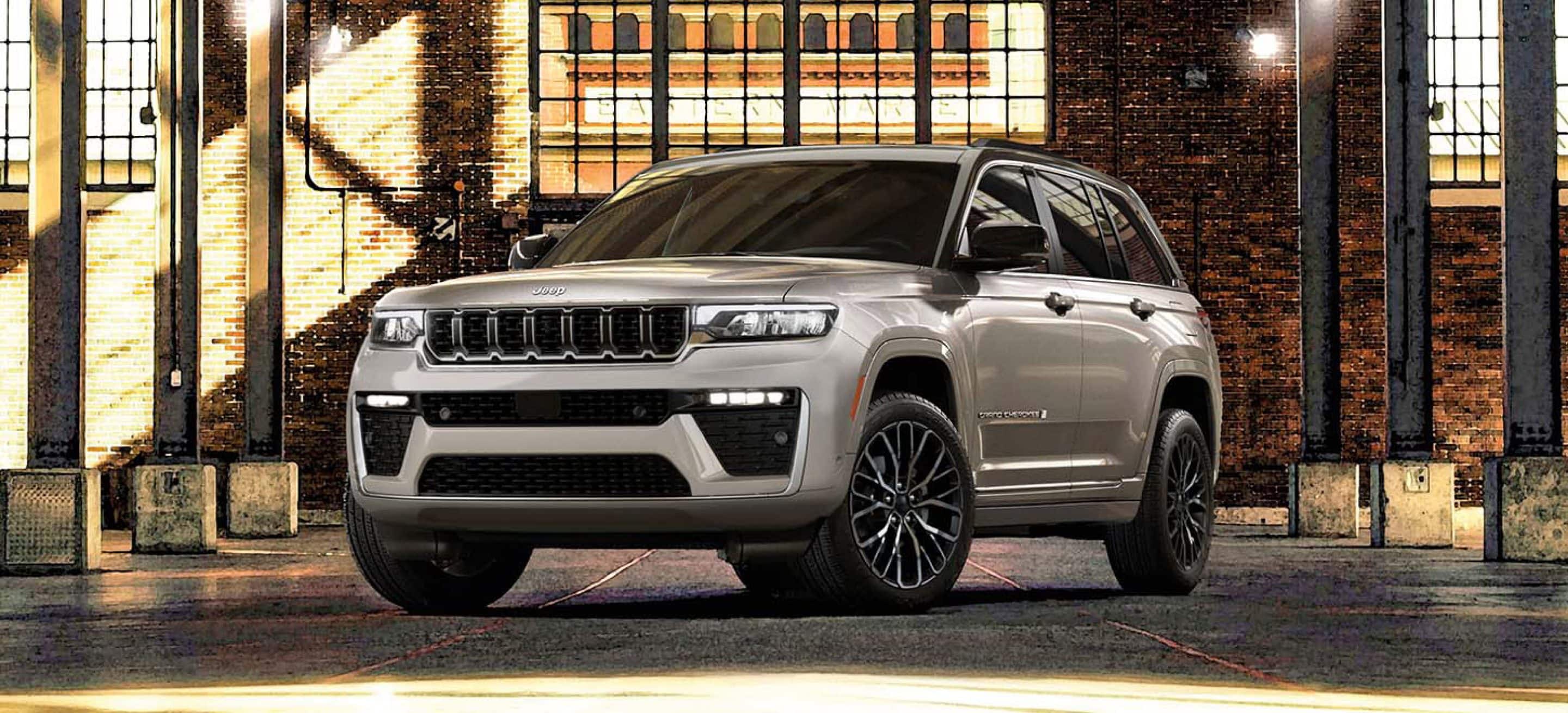
Where things diverge is on the electrified side. Jeep also offers a 4xe plug-in hybrid powertrain that pairs a turbocharged four-cylinder engine with an electric motor for a combined 375 horsepower and up to 25 miles of electric-only range. That plug-in hybrid setup is currently reserved for the Trailhawk trim on the two-row lineup, giving off-road-minded drivers a more efficient, more powerful option without stepping up to the L. If low-end power and efficient daily driving matter more to you than a third row, it’s worth taking a closer look at the plug-in hybrid Grand Cherokee 4xe before you decide.
Trim Levels and Available Technology
Both lineups offer a range of trims, but they’re not identical. The standard Grand Cherokee is available in Laredo, Limited, Trailhawk (paired with the 4xe powertrain), and Summit trims. The Grand Cherokee L offers a wider spread — Laredo, Altitude, Limited, Overland, and Summit, plus a top-of-the-line Summit Reserve.
Regardless of trim, you’ll find core technology across the board, including:
- Wireless Apple CarPlay and Android Auto
- A 10.25-inch digital gauge cluster
- Adaptive cruise control
- Heated front seats
Step up to Limited trim and higher, and you’ll pick up leather-trimmed seating, heated second-row seats, and a premium audio system. At the top of either lineup, Summit and Summit Reserve trims add Nappa leather, available massaging front seats, and a McIntosh premium audio system for a genuinely upscale cabin. Current new vehicle specials can make stepping up a trim level more attainable, so it’s worth checking what’s available before you settle on a configuration.
Which One Fits Your Household?
At this point, the choice usually sorts itself out. If you’re a couple, a small family, or someone who wants agile handling and a smaller footprint for parking around Gurnee and Waukegan, the standard Grand Cherokee covers what you need without carrying extra length you won’t use.
If you regularly transport more than five people, shuttle kids and their friends, or want the option of a third row for occasional guests even if you don’t fill it every day, the Grand Cherokee L is the more practical long-term choice. It’s also worth thinking about resale flexibility — a three-row SUV tends to appeal to a broader pool of future buyers if your household size changes down the road.
Either way, our finance team can walk you through loan and lease options for both lineups so you can compare monthly payments side by side before making a decision.
Frequently Asked Questions
What is the main difference between the Grand Cherokee and Grand Cherokee L?
The core difference is size and seating. The standard Grand Cherokee is a two-row SUV seating up to five people, while the Grand Cherokee L adds a third row and roughly 11 inches of overall length to seat up to seven.
Does the Grand Cherokee L seat seven passengers?
Yes. With the optional second-row bench seat, the Grand Cherokee L seats up to seven passengers. Choosing the second-row captain’s chairs instead reduces total seating to six but adds a walk-through aisle to the third row.
Is the towing capacity different between the Grand Cherokee and Grand Cherokee L?
No. Both the Grand Cherokee and Grand Cherokee L can tow up to 6,200 pounds when properly equipped, so the extra length and seating in the L doesn’t come at the cost of towing capability.
Which model has more cargo space, the Grand Cherokee or Grand Cherokee L?
The Grand Cherokee L offers more total cargo room, with up to 84.6 cubic feet available when the second and third rows are folded down, compared with up to 70.8 cubic feet in the standard Grand Cherokee.
Can I test drive the Grand Cherokee L at Gurnee Chrysler Jeep Dodge Ram?
Yes. You can schedule a test drive of the Grand Cherokee L, the standard Grand Cherokee, or the Grand Cherokee 4xe at Gurnee Chrysler Jeep Dodge Ram to compare the seating, cargo room, and driving feel of each in person before you decide.
Whether you need the compact footprint of the standard Grand Cherokee or the extra seating and cargo room of the Grand Cherokee L, both deliver the capability and comfort Jeep is known for. The best way to choose is to sit in both, load a stroller or a cooler in the cargo area, and see how the third row feels with your family in it. Stop by Gurnee Chrysler Jeep Dodge RAM to compare both SUVs side by side, or contact our team to schedule a test drive at a time that works for you.
0 comment(s) so far on Grand Cherokee vs Grand Cherokee L: What Actually Sets Them Apart